
Why You Suddenly Start Seeing Yellow Cars Everywhere (And What It Can Teach You About Anxiety)
On Thursday 18th June 2026 I saw six yellow cars.
On an eleven minute drive.
Six.
Now, unless St Alban’s has suddenly started an annual yellow car appreciation parade, something else was going on.
What was going on was my attention had changed.
Since launching my hypnotherapy business in summer 2025 I’ve spent a fair amount of time thinking about and teaching people about something called The Yellow Car Theory.
Sound familiar?
If you’re anything like me you may have played the yellow car game growing up. It’s normally played during long car journeys and the rules are that whoever spots a yellow car either gets a point or depending on how savage your family is you get to punch someone on the arm!
Games aside, The Yellow Car Theory is a simple but surprisingly powerful way of understanding how our brains decide what deserves our attention.
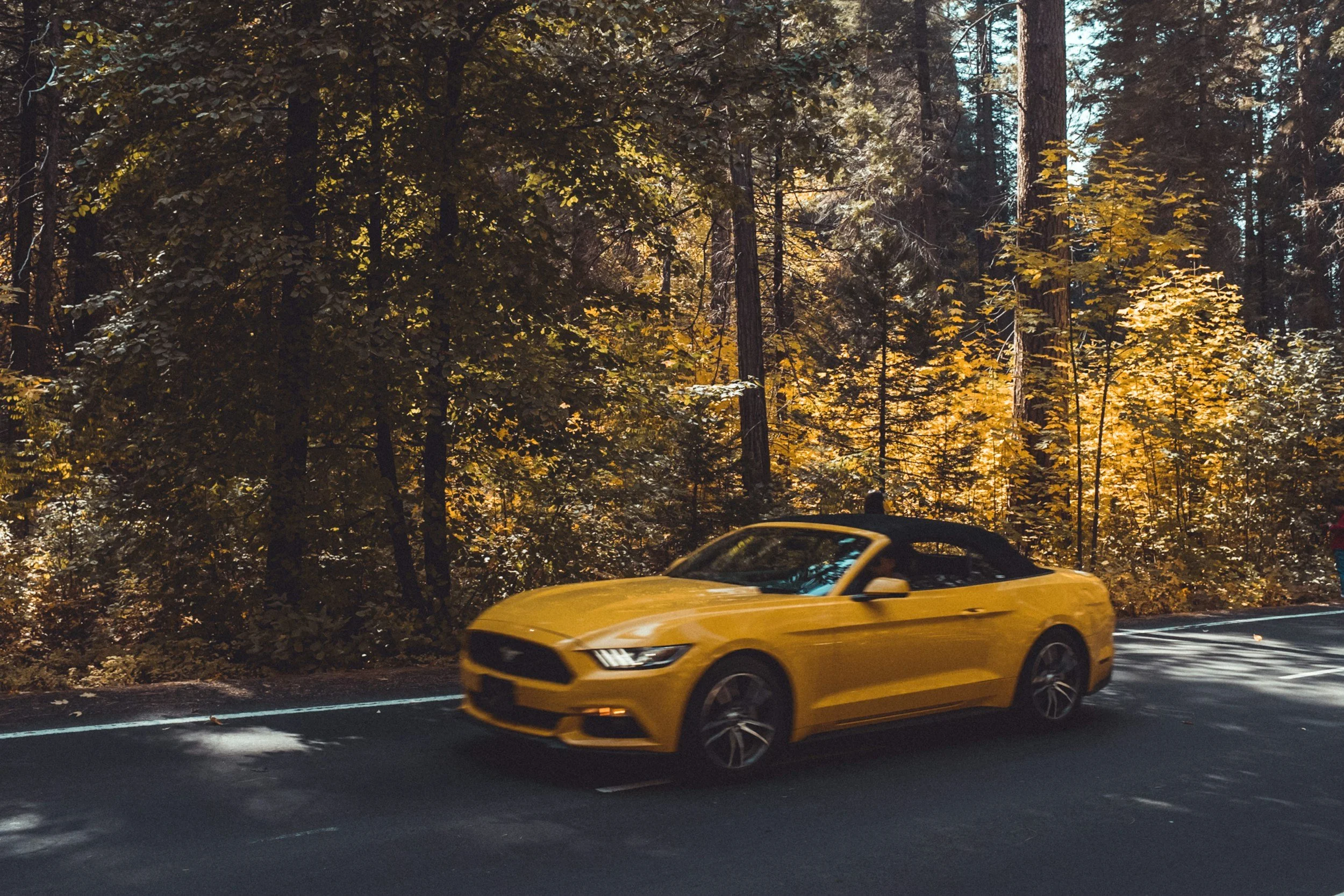
Meet Your Brain's Filter.
Hidden deep inside your brain is something called the Reticular Activating System (RAS).
Think of it as your brain's filter. Or, if you're anything like me and you begrudgingly spend time on Instagram, think of it as your brain's algorithm.
Have you ever noticed that once you stop to watch one reel about sourdough bread, suddenly your entire feed is full of bread-making videos?
Or perhaps your partner has pinched your phone and watched a few videos about fishing, and before long your feed is full of wild salmon, fishing rods and lakes you've never heard of.
It isn't because that's all that's happening on Instagram.
It's because the algorithm has decided, "Ah... this person is interested in fishing."
(For the record, I am not!)
So it starts showing you more of that content.
Well, our brains do something remarkably similar.
Think of it like this:
Every second, your senses take in an extraordinary amount of information.
The colour of every passing car.
Distant birdsong and road works.
Fragments of conversations from passersby.
Insects and animals sharing the pavement with you.
The feeling of your clothes against your skin.
The temperature of the air.
The sensations in your body.
The thoughts swirling around your mind.
If your brain paid attention to ALL of it, you'd become overwhelmed within seconds and probably would just freeze on the spot.
So your Reticular Activating System (your brain’s filter/algorithm) steps in and asks one very important question:
"What's important here?"
And this part is crucial: over time, what we repeatedly pay attention to teaches the brain what's important.
Some of this happens automatically, but most of it is within our influence.
You can choose what your brain focuses on.
Everything else gets quietly filtered into the background.

Why You Suddenly Notice Something Everywhere.
Have you ever…
Found out a friend is pregnant and suddenly noticed babies everywhere?
Learnt a new word and started hearing it every day?
Bought a new pair of shoes and suddenly everyone seems to own the exact same pair?
This is known as the Baader-Meinhof Phenomenon or the frequency illusion.
Once something enters our awareness, our brain starts spotting it everywhere.
Not because it's suddenly appearing more.
But because it's suddenly important.

What This Has To Do With Anxiety.
This is where things get really interesting.
If you are someone who is experiencing a lot of anxiety the chances are your brain is constantly scanning for danger…
And if it’s constantly scanning for danger….
It will find danger.
If it's scanning for rejection...
It will find rejection.
If it's scanning for evidence that you're failing...
You'll notice every mistake you make.
Our brains evolved with something called The Negativity Bias.
Thousands of years ago, back when we were cavemen hunter gatherers, noticing danger was an evolutionary advantage - it kept us alive.
Missing the tiger, bear, wolf or snake skulking in the bushes was far more costly than missing a beautiful sunset.
And the people who were good at spotting danger lived long enough to pass on their genetics to their children. And the children who were good at spotting danger passed on their genetics to their children. And so on and so forth….
Our brains have evolved to keep us alive - not to keep us happy.
Thankfully, most of us don’t live in such dangerous life-or-death environments any more.
Which means sadly, in modern life, that same protective system can become exhausting.
Especially if you’re not aware of The Negativity Bias and humankind’s natural proclivity to focus on the negative.
Because when you're only noticing problems, the world starts to feel like one enormous problem.
So what’s the solution?

Manifestation?
This is normally the point where people sometimes turn to manifestation.
Manifestation suggests that our thoughts attract things into our lives.
Whereas The Yellow Car Theory suggests that our thoughts shape what we notice.
The opportunities may already exist.
The kindness may already exist.
The evidence that you're healing may already exist.
Your brain simply hasn't been looking for it.
It is about offsetting The Negativity Bias with paying attention to the good things too.
It’s simple but powerful.
Can You Train Your Brain?
Absolutely.
This doesn't mean pretending everything is amazing.
Nor does it mean ignoring genuine problems.
It means intentionally widening your focus. So, instead of only asking:
"What's going badly?”
You might also ask:
"What's going well?"
Instead of searching for evidence you're failing...
Also, look for evidence you're growing.
Instead of noticing only stress...
Also, notice moments of calm.
Because the more often your brain notices safety, joy, gratitude, progress, and connection...
The easier those pathways become to access.
Just like walking through a meadow of tall grass and wildflowers. The first time you walk across it, the grass springs back. Walk the same route every day and eventually a path appears. Before long, it becomes the easiest route to take.
This is neuroplatsicty in a nutshell.
What we think, feel and do each day matters.
Our daily choices build our habits.
Our habits form the easiest path to follow and the blueprint for our lives.
This is one of the reasons I love hypnotherapy so much. It isn't about pretending life is perfect. It's about gently teaching the brain that there are more things to notice than negativity, risk and danger.

Why This Matters.
One of the things I love most about hypnotherapy is that it helps people gently guide the brain into a place of calm, confidence and control.
Not by forcing positive thinking.
Not by pretending life is perfect (because life is perfectly imperfect and that’s perfectly okay).
But by helping the nervous system feel safe enough to notice more than just threat.
Because life is rarely all bad.
Or all good for that matter!
Usually... it's a bit of both.
And perspective plays a massive role in this too.
Often, our most powerful tool for healing is our focus.
The Zen Farmer
One of my favourite parables is the story of the Zen farmer.
One day his horse runs away.
"Such terrible luck," his neighbours tell him.
The farmer simply replies, "Maybe."
A few days later the horse returns, bringing several wild horses with it.
"What wonderful luck!"
"Maybe," replies the farmer.
His son then breaks his leg trying to tame one of the horses.
"Terrible luck!"
"Maybe."
Weeks later the army arrives to conscript every able-bodied young man. His son is spared because of his broken leg.
Again the neighbours celebrate his good fortune.
The farmer simply smiles.
"Maybe."
I love this story because it reminds me how quickly we rush to label things as good or bad.
When the truth is that often, we simply just don't know yet.
No one knows what’s around the corner.
Life is always unfolding.
And that's exactly why perspective matters.
The Yellow Car Theory teaches us what we notice.
The Zen Farmer reminds us how we interpret what we notice.
Both shape our experience of the world.

To Conclude, A Little Experiment…
Now it’s your turn.
How many yellow cars will you see today, tomorrow, or even this week?
Now that yellow cars have been brought into your focus just notice what happens.
You don’t have to force anything just allow your focus to lead the way.
You might be surprised by how many yellow cars you discover...
And yellow cars are a little bit like good things
Or joy.
Or kindness.
Or hope.
They were there all along.
Sometimes, all that's changed is where you've chosen to look.