
Why I Read Tarot (And Why I Think It Works)
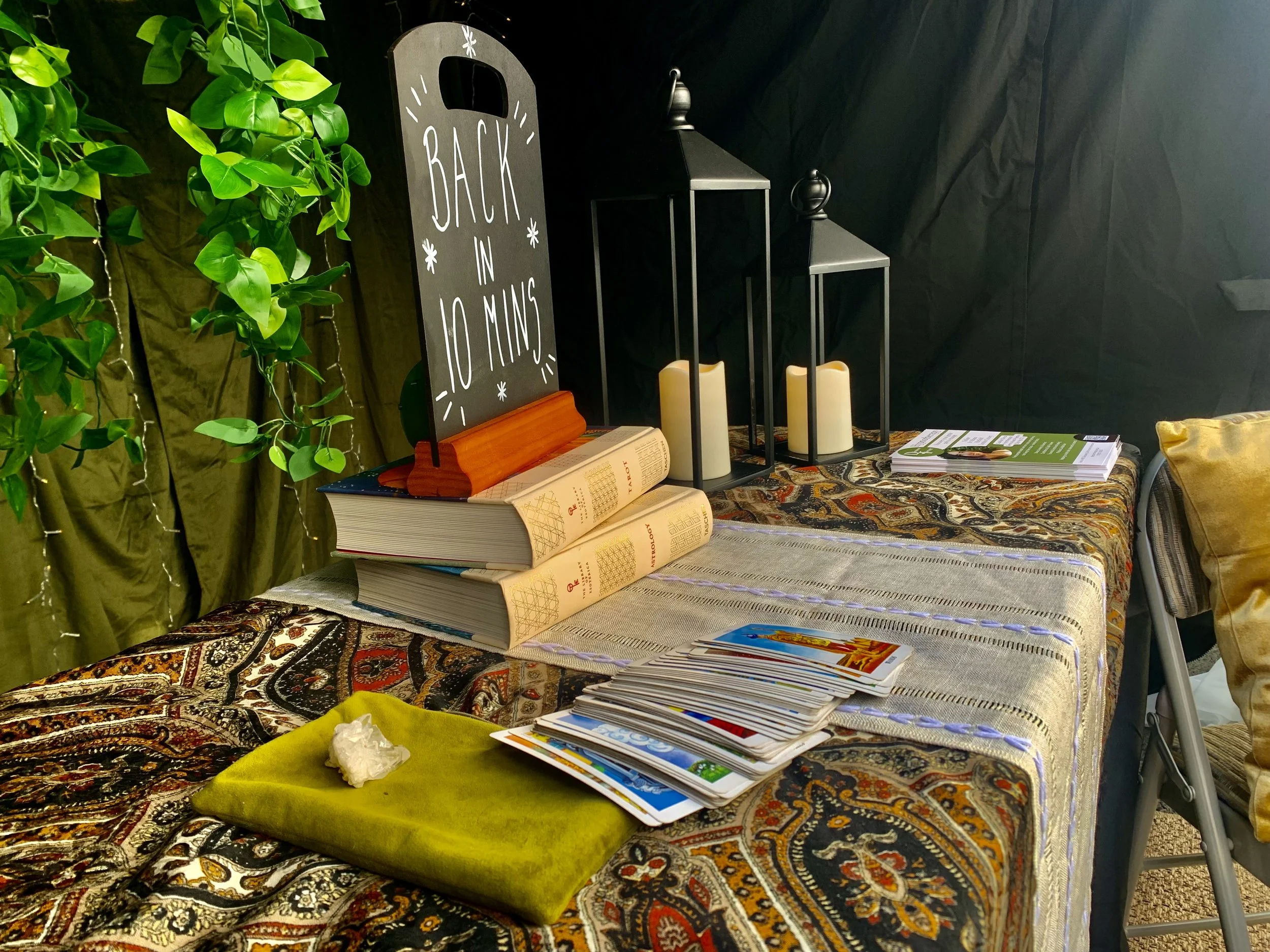
When I say the word Tarot, what’s the first thing that comes to your mind?
Mystic Meg?
Crystal balls?
An elderly woman wearing a headscarf perched in a candlelit caravan?
I get it.
Tarot has a reputation.
And honestly, I think that’s partly what drew me to it in the first place.
As a child, I was always fascinated by mysterious and supernatural things.
My shelves and bedroom walls were covered in Harry Potter and Buffy the Vampire Slayer books and posters. I loved anything that hinted there might be something deeper beneath the surface of ordinary life.
But my journey into tarot itself was remarkably ordinary.
I remember being in Tesco when I was about eleven or twelve years old with my mum just helping her with the weekly food shop.
And there was a beginner’s tarot set sitting on a shelf.
And that was that.
I asked for it and my mum bought it for me.
No ancient prophecy.
No magical blood line.
Just an instinct.
And honestly, I love that.
Because to me, it’s crucial to realise that tarot is at its most powerful when it exists in ordinary life.
Tarot isn’t reserved for mystical people living on mountains.
It’s an everyday tool that is available to anyone who is willing to slow down, reflect, and listen to themselves a little more deeply.
My Tarot journey began in Tesco and continues to this day.
For the last twenty years or so, I’ve read tarot for myself, friends, family, and clients across the UK.
And the reason I continue to love tarot after all this time is because it creates a beautiful balance between the known and the unknown.
Tarot allows us to hold two truths at once:
The part of life we can explain.
And the part of life we can only feel.
And interestingly, that’s also one of the reasons I love hypnotherapy so much too - hypnotherapy helps us create balance between the conscious and the subconscious mind (more of that later.)
This blog has been heavily influenced by three writers whose work has shaped the way I think about tarot: Rachel Pollack, Bakara Wintner, and Mya Spalter - all of whom explore tarot as a rich psychological and symbolic practice, whilst also keeping it practical, accessible, and deeply human.

So… What Actually Is Tarot?
One of the most fascinating things about tarot is that nobody fully agrees on what it is or where it came from.
Some historians trace it back to Renaissance Italy. Others connect it to Ancient Egypt, Ancient Greece, mysticism, alchemy, Kabbalah, or other spiritual traditions and systems of ritual.
It’s widely believed that tarot evolved from an Italian card game into a tool used for divination and spiritual reflection - but again, the true purpose and journey of the cards remains wonderfully uncertain.
And perhaps that mystery is part of why tarot continues to captivate people centuries later.
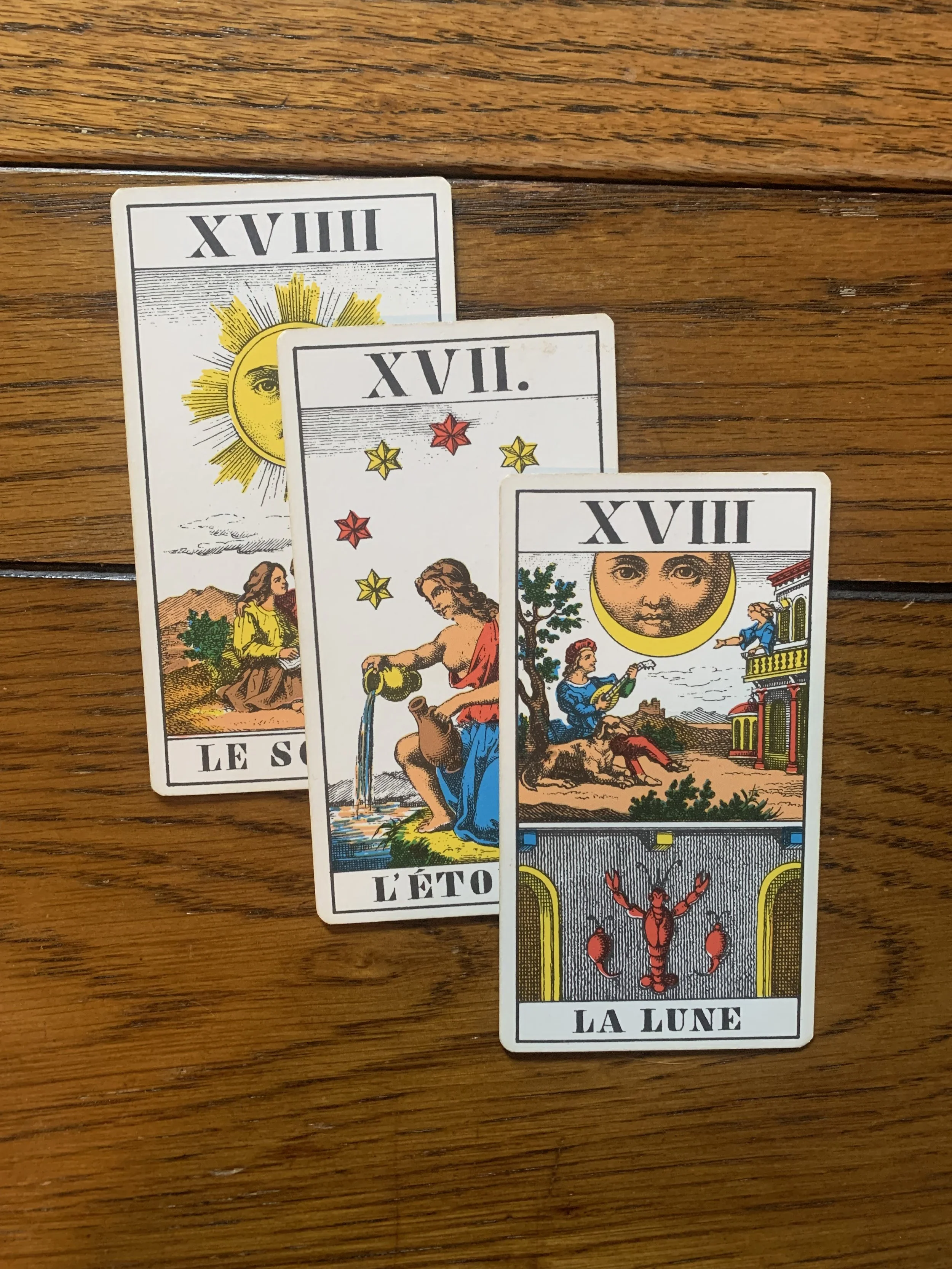
What we do know is that some of the oldest surviving tarot decks date back to the fifteenth century, including the Visconti-Sforza deck and the Tarot de Marseille.
Then, occultists from mystical societies - most notably the Hermetic Order of the Golden Dawn in London - expanded tarot into the system many people recognise today. Arthur Edward Waite and Pamela Colman Smith co-created the famous Rider-Waite-Smith deck in 1910, which remains one of the most celebrated tarot decks in the world today.
What fascinates me is the way in which tarot has survived centuries, cultures, and social change - because it speaks to us on a very deep, human level.

Tarot as a Symbolic Language
At its core, tarot is a symbolic language.
It’s believed that the cards capture the full spectrum of human experience - love, grief, fear, joy, heartbreak, transformation, conflict, hope, uncertainty, beginnings, endings, and everything in between.
A traditional tarot deck contains two parts:
The Major Arcana
These are the twenty-two archetypal cards like:
The Fool
The Magician
The Empress
Death
The Lovers
These cards tend to explore more profound, spiritual themes and turning points in life.
The Minor Arcana
These are the fifty-six suit cards - they are usually Cups, Pentacles, Swords, and Wands - which focus more on everyday experiences, relationships, emotions, work, communication, and practical life.
Combine the Major and Minor Arcana and these cards create stories.
And just like any language, reading tarot fluently takes time, practice, and nuance.
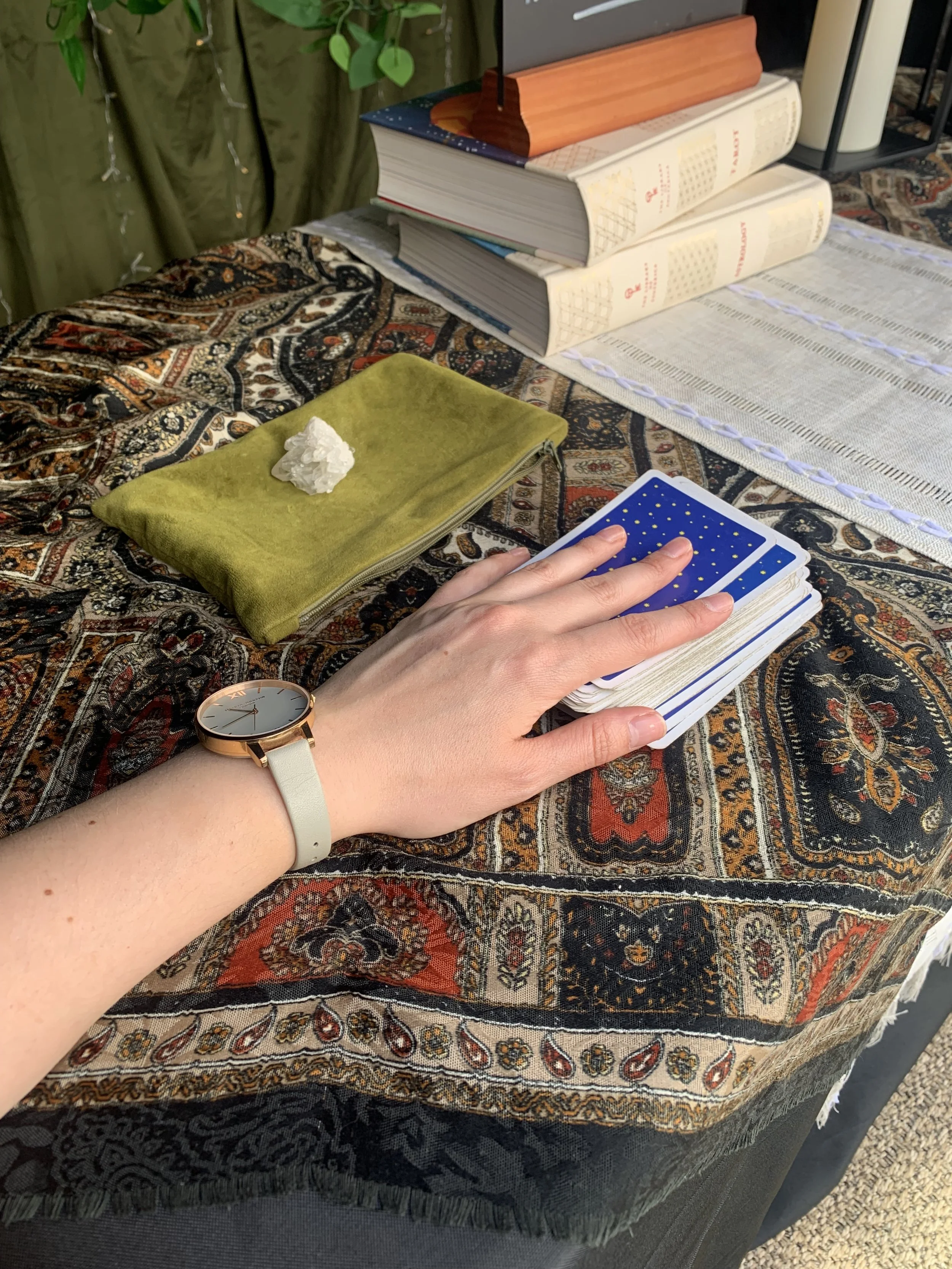
Why Tarot Feels So Accurate
This is probably one of the hardest questions to answer.
How does tarot work?
Personally, at its core, I don’t believe tarot is really about “predicting the future” in a dramatic Hollywood sense.
I think tarot is much more about reflection, intuition and perspective.
Very often, tarot tells people things they already know deep down.
And that can feel incredibly reassuring.
The cards can shine a light on feelings we’ve been avoiding, truths we already sense, or patterns we’ve unconsciously fallen into.
That’s why tarot can feel surprisingly therapeutic.
It encourages honesty.
It asks you to pause.
To pay attention.
Now, can tarot sometimes draw our attention towards the future?
Absolutely.
I’ve seen this time and time again.
Tarot can absolutely illuminate where our current path may be leading, comparable to how deep down, we already know that if we continue smoking twenty cigarettes a day then there will probably be consequences for our health.
I like to think of it like this:
Tarot can show you the path you’re on and where that path is heading.
But you can still choose to change direction.
Tarot, The Subconscious Mind, and Intuition
One of the reasons tarot resonates so deeply with me is because I see so many parallels between tarot and hypnotherapy.
In hypnotherapy, we talk a lot about the conscious mind - the intelligent, rational, analytical part of the mind - as well as the subconscious mind - the deeper part of ourselves where memories, emotional patterns, instincts, fight-or-flight, fears, beliefs, and automatic responses live.
When you sit down for a tarot reading, you naturally shift away from pure logic and analysis and begin engaging with imagery, emotion, memory, intuition, and imagination instead.
You stop trying to “figure everything out” intellectually.
And you start listening to yourself differently.
Carl Jung referred to something called the collective unconscious - this is the idea that human beings share universal symbols, archetypes, and emotional patterns across cultures and generations.
Loss. Hope. Fear. Love. Change. Longing. Courage.
Many tarot readers believe tarot resonates so deeply because the cards act as mirrors into the collective unconscious - the cards feel familiar because the emotions inside them are familiar.
Magic, Synchronicity, and Mystery
Now here’s the part where things get a little more difficult to explain.
Because tarot also lives in the realm of mystery.
And I think that’s okay.
Most people have experienced moments in life that feel strangely meaningful or difficult to fully explain. Let me tell you a personal anecdote from my life…
I remember, January 2021, driving through Salisbury on our way to my nan’s funeral with my mum. The sky was grey and the radio hummed quietly in the background, filling the silence.
And then, a light rain started to fall, the cold winter sun shone through, and a rainbow appeared in the sky.
We knew we’d be singing ‘Somewhere Over the Rainbow’ by Judy Garland, my nan’s favourite song, during the service soon.
I got goosebumps.
Now logically, of course there are scientific explanations for rainbows.
But emotionally? Spiritually? Symbolically?
The timing felt incredibly meaningful.
And that’s often how these moments work.
Some people call that magic.
Others call it synchronicity, spirituality, coincidence, universal intelligence, or simply heightened awareness.
The language itself matters less to me than the feeling behind it.
Most people have experienced moments that feel connective, symbolic, or oddly perfectly timed:
Hearing a song exactly when you needed it
Seeing robins or white feathers after loss
Specific numbers like 11:11 appearing just at the right moment
Bakara Wintner describes it beautifully:
“Science knows that we have a beating heart, but what makes it beat? Why is it beating? Magic is leaning into the gorgeous mystery of it all.”
I love that.
Because tarot invites us to lean into mystery a little.
Not blindly.
Not irrationally.
But with an open curiosity.
Why I’ll Always Love Tarot
After twenty or so years of reading tarot cards, what continues to amaze me most is tarot’s ability to help people reconnect with themselves and feel:
calmer
clearer
more centred
more in control
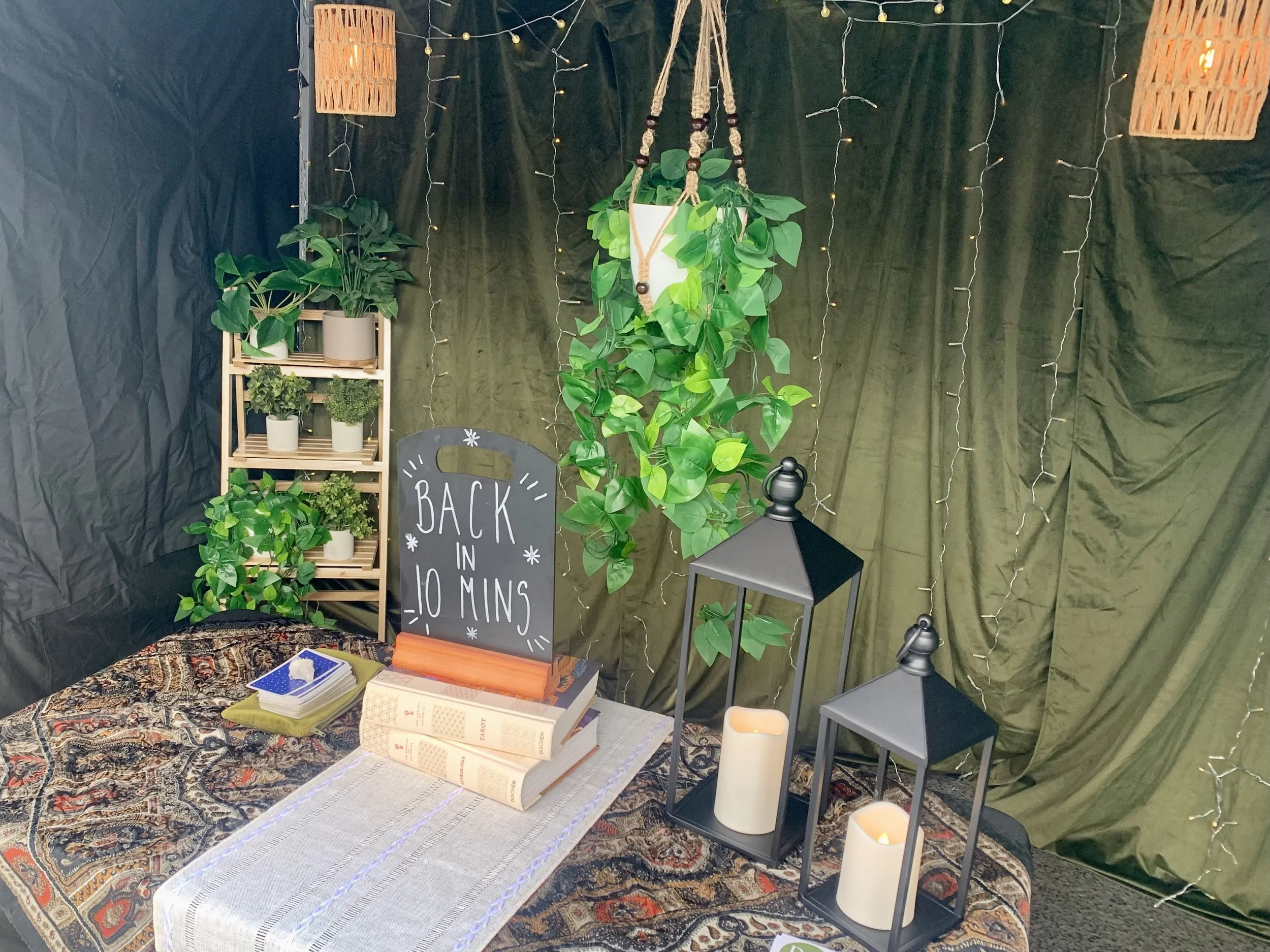
This summer, alongside my hypnotherapy practice, I’ll be reading tarot at markets, festivals, and events all across the UK, as well as offering private readings online and in person.
I also facilitate ‘Tea, Trance & Tarot’, a gentle online Summer Solstice Ritual with light hypnosis, tarot, journaling and reflection for anyone who’s spiritually curious. Tickets can be bought here: https://www.eventbrite.com/e/tea-trance-tarot-an-online-summer-solstice-ritual-tickets-1989660470026
If you’re curious about tarot - from a spiritual or psychological perspective - you’re very welcome here.